The Future No One Wants to Admit: 7 Predictions About AI That Will Change Everything
There’s a quiet tension in the air every time someone mentions “AI.” Some call it the next industrial revolution. Others call it the end of human creativity.
But beyond the hype and fear, something deeper is happening — a reshaping of how we work, think, and even define what it means to be human.
We’re still early in this story, but here’s what the future looks like — the version no one really wants to admit.
1. Creativity Will Become a Skill, Not a Talent
For centuries, creativity was treated like magic — something reserved for the gifted few. Now, with AI generating music, art, and even novels in seconds, creativity is being democratized.
But that also means it’s being commoditized.
The real winners won’t be those who can create something from nothing — but those who can create something new from everything. The human edge will shift from producing to curating, remixing, and guiding AI’s creative chaos.
Creativity will no longer be about talent. It’ll be about taste.
2. Jobs Won’t Disappear — They’ll Mutate
Every technological leap brings the same fear: job loss. But history tells a different story. The printing press didn’t eliminate writers; it made more of them.
AI won’t erase work — it’ll reshape it. Roles like “AI ethicist,” “prompt engineer,” or “synthetic data designer” didn’t exist five years ago. Tomorrow’s careers will blend human intuition with machine precision.
The people who thrive won’t cling to titles — they’ll evolve with the tools.
3. The Real Power Will Be in Data Ownership
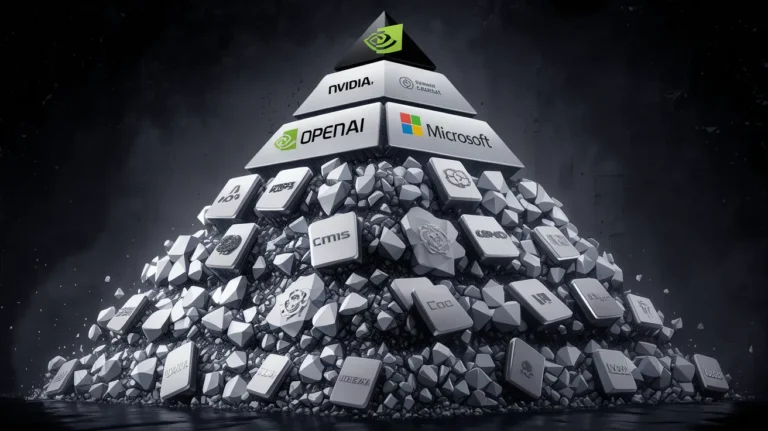
Forget AI models — the real gold rush is in data.
The companies that win the future won’t necessarily build the smartest models. They’ll own the richest, cleanest, most exclusive datasets.
Think of it like the oil of the digital age: the models refine it, but the data fuels everything. And here’s the uncomfortable truth — most of us are giving that fuel away for free every time we post, click, or scroll.
4. The Line Between Human and Machine Will Blur
It’s already happening. We use AI filters to edit our photos, grammar tools to refine our writing, and recommendation engines to shape our opinions.
Bit by bit, our decisions — and even our identities — are being co-authored by algorithms.
Soon, we won’t ask “Is this made by AI or a person?” Instead, we’ll ask: “Does it matter?”
5. Education Will Be Turned Upside Down
Schools are still teaching kids how to memorize facts in a world where ChatGPT can recall anything instantly. That’s like training horses during the rise of the automobile.
The next generation won’t need to know as much — they’ll need to ask better.
The future of education isn’t about filling heads with information. It’s about shaping minds that can think critically, question intelligently, and collaborate with machines.
6. Ethics Will Become the New Arms Race
The question isn’t whether we can build powerful AI. It’s whether we should.
As AI becomes embedded in everything from healthcare to warfare, nations and corporations will race not just for technical dominance, but for moral legitimacy.
The defining challenge of the 2030s won’t be capability. It’ll be conscience.
7. The Definition of “Human” Will Expand
At some point, AI will simulate empathy, humor, and love so convincingly that we’ll have to redefine what it means to be human.
When your AI assistant knows your preferences, moods, and fears better than your partner does — what happens to intimacy? To friendship? To authenticity?
The line between “real” and “artificial” won’t be erased. It’ll just become irrelevant.
Final Reflection
The future of AI isn’t just about machines getting smarter. It’s about humans deciding who they want to be in a world where intelligence is abundant and attention is scarce.
We can resist it, fear it, or shape it. But what we can’t do is ignore it.
Because the future isn’t coming — it’s already here, whispering in our search results, our playlists, and our inboxes.
💭 So here’s the question:
When machines start thinking like us, will we rise to think — and act — more like humans?