AI and the Data Science Job Market: What the Hell Is Actually Happening?

Not long ago, data science was the “sexiest job of the 21st century.” Bootcamps were full, salaries were high, and every company wanted a team of data scientists.
Fast forward to today, and the story feels… confusing. Some people say the market is saturated. Others say AI is replacing data scientists altogether. And yet, you’ll still find job postings that get hundreds of applicants overnight.
So what the hell is actually happening?
The hype cycle effect
Let’s rewind. Around 2015–2020, data science was booming. Companies wanted to hire “unicorns”—people who could code, analyze data, and explain insights like storytellers.
But here’s the catch: many companies didn’t really know what to do with their shiny new data teams. A lot of early roles were poorly defined, mixing everything from dashboarding to deep learning into one job description.
The hype attracted a flood of talent—bootcamp grads, career switchers, PhDs—all racing into the field at once. Suddenly, the supply of data scientists exploded.
Enter AI: friend or foe?
Then came generative AI. Tools like ChatGPT and AutoML made it easier to do tasks that once required a junior data scientist.
Need SQL queries? AI can draft them.
Need a quick model? AutoML has your back.
Need data cleaning help? There’s a script for that.
This sparked a fear: “Is AI replacing us?”
But here’s the nuance. AI is automating tasks, not jobs. Just like Excel didn’t kill accountants, AI won’t kill data science—it will just change what “valuable” work looks like.
The market split: tasks vs strategy
I spoke with a friend, James, who recently landed a role as a senior data scientist at a fintech startup. He told me: “We don’t hire people to write endless SQL queries anymore. We hire them to design experiments, guide strategy, and know which questions actually matter.”
That’s the key. The market is splitting.
- Task-based roles (simple analytics, reporting, basic modeling) are shrinking fast.
- Strategy-driven roles (defining metrics, shaping business impact, building AI responsibly) are growing in importance.
In other words: AI is eating the “grunt work,” but not the thinking.
Real-world example: the résumé flood
Here’s another story. A hiring manager at a retail company posted an opening for a junior data analyst. Within 48 hours, they had over 500 applicants.
But when they posted for a senior role focused on AI strategy, experimentation, and leadership? They struggled to fill it.
This isn’t a shortage of talent. It’s a shortage of the right kind of talent.
What this means for you
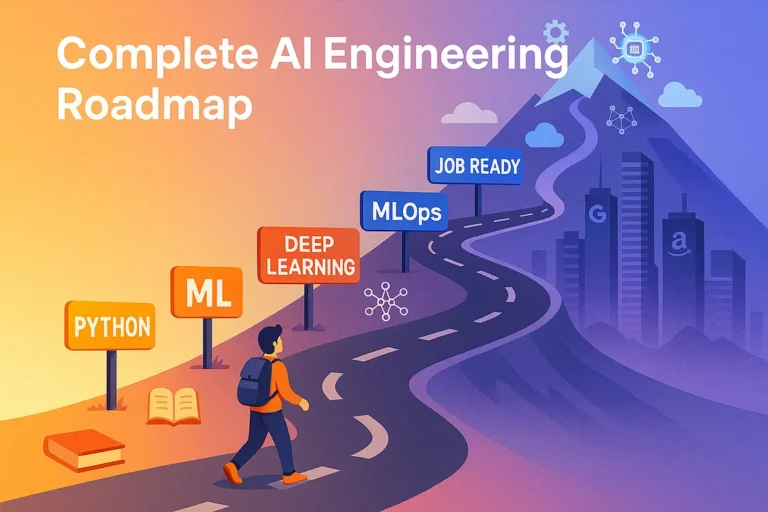
If you’re breaking into the field, it’s no longer enough to say, “I can build models.”
You need to show you can:
- Connect data work to business outcomes.
- Use AI tools to accelerate your workflow, not fear them.
- Communicate insights in ways non-technical teams can act on.
If you’re already in the field, your edge will come from curiosity and adaptability. Those who embrace AI as a co-pilot will thrive. Those who cling to repetitive, automatable tasks may struggle.
Conclusion: The messy middle
So, what the hell is happening in the data science job market?
We’re in the messy middle. The hype wave has crashed, AI is rewriting the playbook, and the roles are evolving from “do everything” to “drive strategy.”
It’s not the end of data science. It’s the end of data science as busywork.
Which leaves us with one big question:
👉 Are you preparing to compete with AI—or to collaborate with it?