Failing fast with AI
The first time I tried building an AI-powered tool, I failed.
Not in a dramatic, “everything crashed” way—more like a quiet realization that what I had built wasn’t useful.
At first, it stung. Weeks of work, and nothing to show.
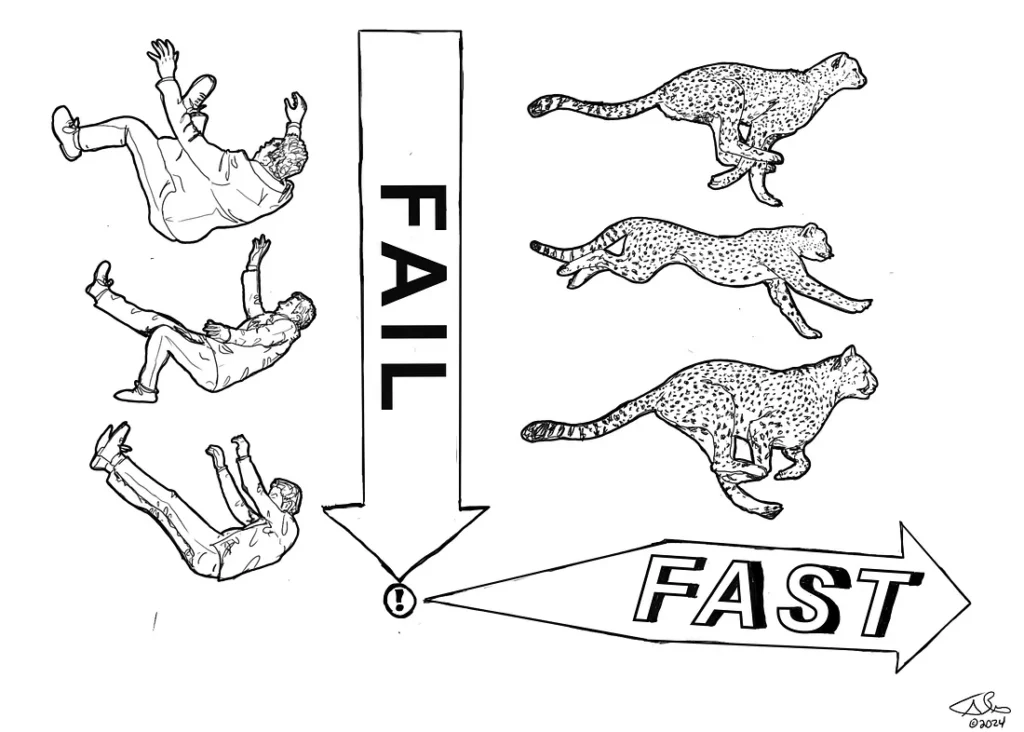
But looking back, that early failure was the best thing that could have happened. It taught me the most underrated skill in the age of AI: failing fast.
Why failing fast matters
In the old world of business, projects took months or years to validate. You’d plan, build, polish—and only then discover if people wanted it.
AI flips that on its head. Tools are fast, cheap, and accessible. What took a team six months in 2015 can be done by one person in six days today.
But here’s the catch: speed without direction just means you can fail slower. That’s why failing fast—testing ideas quickly, learning, and moving on—is critical.
A story from the trenches
A friend of mine, Sarah, tried to build an AI writing assistant for lawyers. She spent months researching legal frameworks, buying domain names, even designing a sleek website.
When she finally showed it to a few lawyers, the feedback was blunt: “We don’t need this.”
It hurt. But she pivoted. Instead of building for lawyers, she created a tool for startup founders who needed simple contract templates. Within weeks, she had paying customers.
The difference? She failed fast the second time—by testing ideas before over-investing.
Prototypes over perfection
When you’re working with AI, think prototypes, not polished products.
You don’t need the perfect chatbot or the smartest recommendation system from day one. Instead, you need the scrappy version that helps you answer one question: Does this solve a real problem?
Build a quick demo. Share it with someone who might use it. Watch how they react. Their expression will tell you more than any polished pitch deck.
Failure as fuel
The beauty of AI is that failure is cheap. You don’t need a massive budget or a huge team.
You just need curiosity, persistence, and the courage to admit when something isn’t working.
Every failed experiment is a map. It shows you what not to do, and sometimes points you to what actually matters.
The only true failure? Spending months chasing an idea without ever testing if it makes sense.
Conclusion: Redefining failure
In the AI era, failure isn’t a dead end—it’s a feedback loop.
The faster you hit walls, the faster you find doors.
So next time you think about building something with AI, don’t obsess over making it perfect. Make it real, make it fast, and put it in front of people. Then, listen.
Because the question isn’t, “Will I fail?”
The real question is:
👉 How quickly can I learn from it?